Reading inventory
Inventory tends to show up before earnings do. When profits and cash drift apart, the gap is usually sitting on a shelf somewhere.
Buying isn't expensing.Inventory sits on the balance sheet at cost until it sells. Only then does it move to cost of goods sold. Which is how a company books a strong quarter and is still short of cash at the end of it. A company that builds inventory looks profitable while burning cash; one drawing down inventory looks weaker on the income statement while generating cash. Most of the "profitable companies that ran out of cash" stories probably start here.
The three buckets each tell a different story. Raw materials climbing could be confidence about a contract, could be fear about supply. Work-in-progress rising could mean something is stuck somewhere on the floor. Finished goods piling up while sales stay flat is most likely slow-moving demand management hasn't fully admitted to itself.
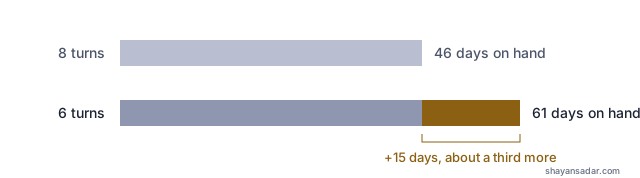
Turnover only matters in context.Turns as cost of goods sold over average inventory. Using sales instead inflates the number, since sales carry margin and inventory doesn't. A grocer at 6x is in trouble. A jeweler at 6x is fine. What matters more is the trend within a single business. When a retailer's turns drop from 8 to 6, inventory is aging by roughly a third, and that aging usually shows up later as markdowns. The level on its own says less than the direction.
Lean inventory could be efficiency or fragility, and I don't have a clean test for telling them apart while it's happening. Inventory is one of the few line items on the balance sheet that reads like a live operational signal rather than an accounting residue. Most of the rest of the balance sheet is photographs of past decisions while inventory is closer to a pulse.