Why I didn't switch from tech to finance
In late 2023 I moved into an AI Solutions Manager role. I had a data science background and was already trying out new tools. I was grateful for the opportunity, and it also postponed the decision to transition into finance, something I had been circling for years. I had taken an interest in US equities around 2019 during my Master's, used financial and sports data for most of my projects and hackathons, and spent the years after that reading about investing. Even during school, I did well in Economics and picked it over Computer Science. I initially wanted to go into Commerce and become a Chartered Accountant, and ended up in Science and then Computer Science instead.
Python was my core language from university onward, and it held my interest because it sat close to numbers and data, which is where Economics had left me. I worked in Java, Ruby, C++ and JavaScript over the years, always to build something rather than to learn the language. I was never deep in algorithms or competitive programming and it never appealed to me. I had used software as a way to build things, and I had started to wonder whether that made me less of a software engineer than I had assumed. Before deciding anything I wanted to make one thing at the intersection of both interests. I used Cursor to put together an investment research platform running on filings straight from the SEC.The US Securities and Exchange Commission. Its EDGAR APIs provide company filing histories and extracted XBRL financial-statement data. SEC documentation.
To my surprise, I enjoyed turning those concepts into something real and directing the work around a larger idea. Building got faster, the scope got larger, and I wanted to keep going.
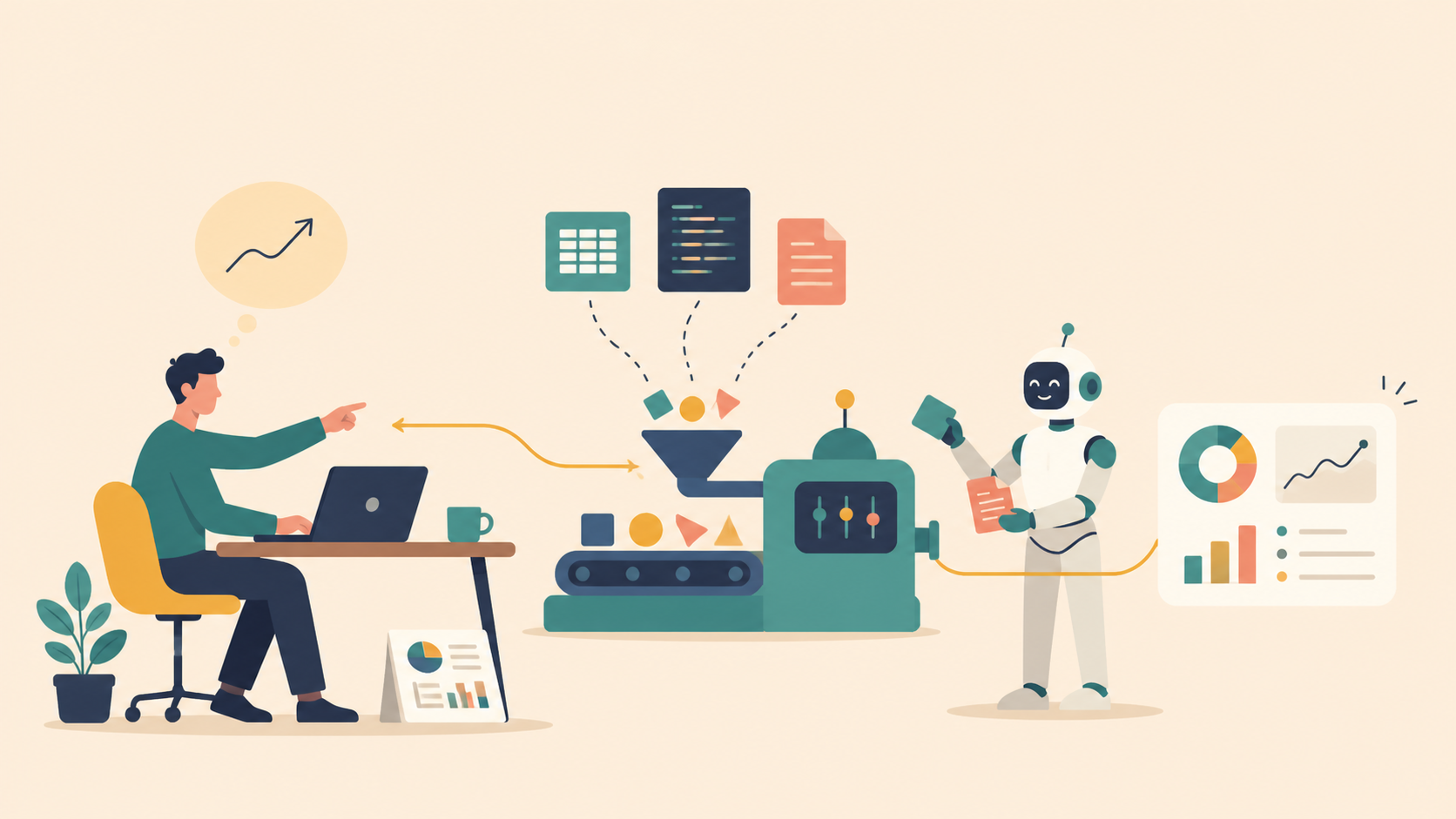
I still thought about the CFAThe Chartered Financial Analyst credential requires passing three exam levels, 4,000 hours of relevant work experience over at least 36 months, and membership requirements. CFA Institute. after leaving my job. It requires more than 900 study hours across three levels and takes more than four years on average to complete. The charterholders I spoke to described it less as a route into finance than as a way to deepen work already grounded in relevant experience. Then there is the direction of the curriculum. In 2024, CFA Institute made practical skills modules mandatory at Levels I and II. At Level II, one option covered Python, data science and AI, and the Institute had already launched a separate data science certificate in 2023. Finance was adding the technical layer to itself. The combination I was considering building is one I already hold most of.CFA Institute's 2023 programme announcement and its Data Science for Investment Professionals Certificate announcement.

I had been treating this as one decision when it was two. The first was whether to work in finance for a living. That meant the analyst seat, the charter, and the years they take. I decided against it. The second was whether finance stayed the thing I read about and thought about. That never changed. It took me a while to see the two could be answered separately.
I also wanted to keep building in tech, which was something I enjoyed. It took months to get here, and most of that was time away from building rather than time spent deciding. By then I had costed the hours, read where the curriculum was going, and asked people holding the charter what it had done for them. The numbers and the preference happened to agree. I had to stop for a while to find out I wanted to go back.