Owning a job first
I still make most of the calls at my company. The times I handed something over early, it came back to me as a backlog, in worse shape than before I gave it away. That's when it felt like I owned a job rather than a business.
I used to write the process down, hand it off, and hope to grow without adding implementation hours. That's the happy path. The mistake was doing that before I'd lived enough of the execution myself. I understood the problem and what a good outcome looked like, but not yet all the places the work could go wrong. So what I handed over looked like a process, but it was really a set of instructions with the hard-earned judgment missing.
That matters even more when you've built the product around a problem you had yourself. I carry a lot of context almost automatically: what matters, what doesn't, when something feels off, and where the edge cases are likely to be. The person taking over doesn't start with any of that. Explanation transfers some of it, motivation helps them chase the rest, but until the missing judgment has either been learned or encoded into the process, those gaps show up in the outcome.
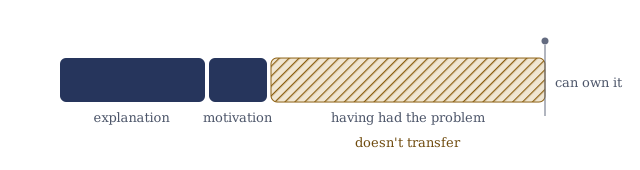
Which puts the weight on hiring. These gaps are what to interview for, even if the right fit takes a long time to find. You need more than one of them, because a business resting on a single successor has moved the same problem one seat over.
For my part, I should be looking for the areas of my work that have stopped surprising me and turned into routine. Those are the pieces to hand off, incrementally rather than all at once, and not the parts I'm still figuring out.
I'm not there yet. The frontier keeps moving and the team has to move with it, which is either a real reason or a comfortable one. I can't always tell.