A year after quitting my job to build my own product
The advice everywhere now is to start something on the side, grow it past your salary, and quit once the numbers cross. It's clean, and it assumes the hard part is revenue.
Two things sit badly with me. Once the side thing is real, your attention has already started to leave your employer. And a business moves roughly at the speed of the effort in it, so keeping it on the side makes it take longer. That's a fine trade when it's chosen and usually it isn't.
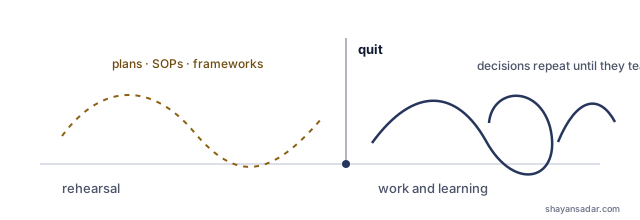
Years of employment train you for security, steady cash flow, and growth in a straight line, while the other path moves in spikes. A few flat months can crack someone and send them back to the job they left. So the side business is a cushion, and my sense is that it's a mental one more than a financial one.
A side business is an active effort alongside an active job. Something worth doing before you quit is closer to rehearsal: the plan, a walk through the first few months, some basic SOPsStandard operating procedures - written instructions for doing recurring work the same way. and frameworks written down while a salary is still landing. None of it moves a business forward. It reduces how much you'll be learning for the first time later, when learning is more expensive.
I quit a year ago. As I moved out of writing code and into product and customer success, what the work was about started to matter more than how it was built. I was making things for healthcare and reading about markets in my own time, and it became clear which of the two I kept coming back to. The plan was to carry my skills across to something I actually wanted to think about, own it fully, and build it my way.
Early on I was in a hurry to make the first dollar: ship an MVP,Minimum viable product - the smallest version of a product useful enough to put in front of someone and learn from. put it in front of someone, watch money move. My instinct runs the other way, toward finishing something properly, which takes longer and gives a person something they keep using. The hurry produced a product I wasn't happy with, and I circled the same problems and the same decisions several times over.
Going full time gave me more time to work, but it didn't give me the judgment to know which work mattered. I built the product and then built the framework to work out which parts of it weren't working. My initial software stack was migrated multiple times and eventually cut in half. In the right order, that would have been much shorter.
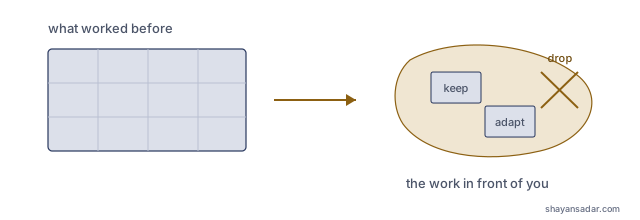
The ways of working I brought with me had been built for a different organisation, with different people, constraints, and goals. I treated them as tools that had worked before, rather than asking whether they were right for the work in front of me.
There isn't a method you can lift whole from one place and set down somewhere else. You have to build the way you work around the goal, the people doing it, and the problem as it actually is. For me, that meant deciding what was worth keeping, what could be made simpler, and when the product needed a different answer from the one I'd started with.
Entrepreneurship runs on a different clock, in years rather than sprints, with money going out well before any comes back and the rules changing while you work. That switch doesn't arrive the morning after you quit. It took me months and it isn't finished. Experience is the asset that compounds here, and it only does that while you're still in it.